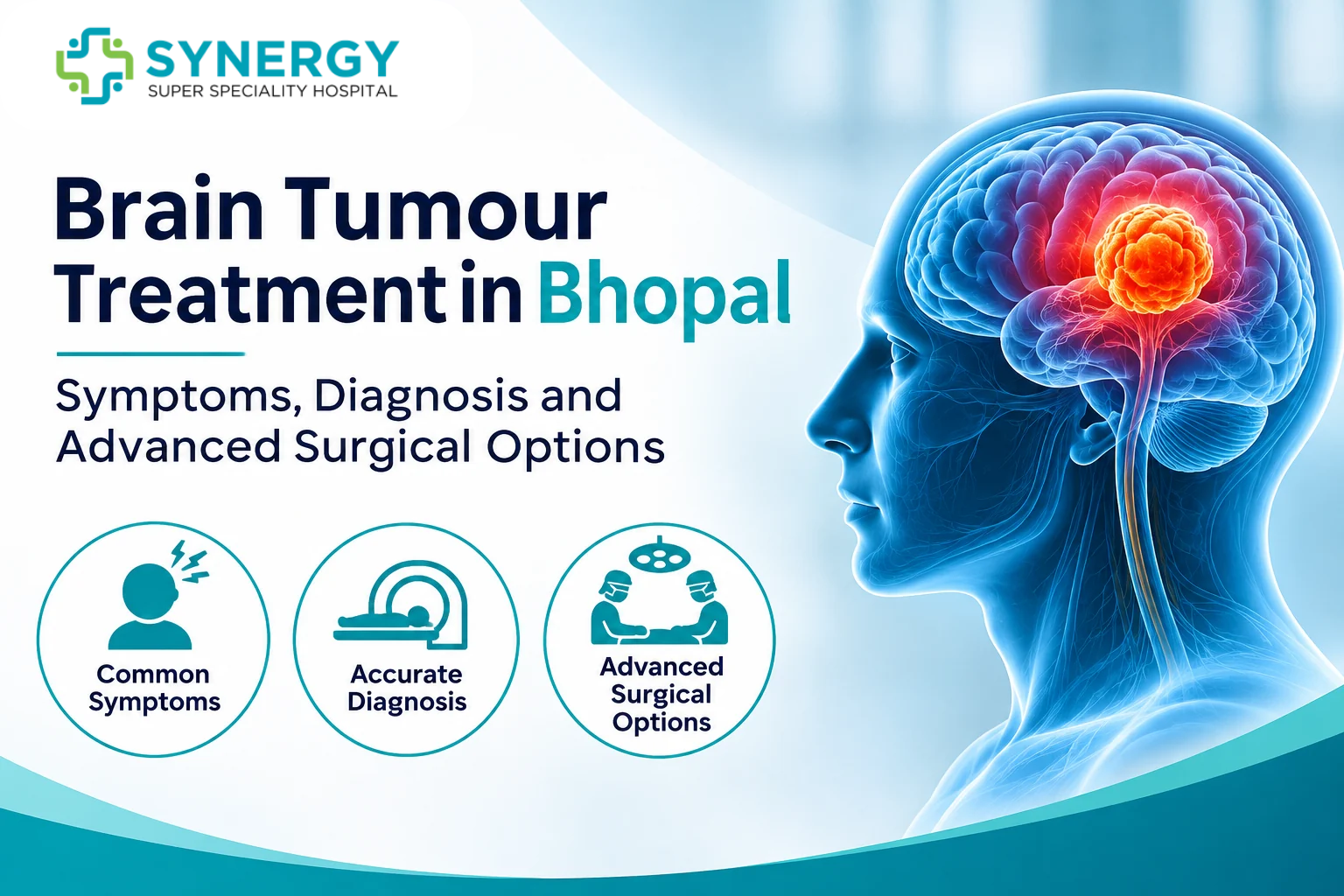
Brain Tumour Treatment in Bhopal involves understanding the tumour type, assessing its location and size, and selecting suitable treatment options. Depending on individual medical requirements, treatment may involve surgery, radiation therapy, chemotherapy, medication or regular monitoring. Synergy Super Speciality Hospital, located in Saket Nagar, Bhopal, provides a multispeciality healthcare setting. Patients exploring neurological and neurosurgical care can enquire directly about the availability of relevant specialists, investigations and treatment facilities.
Depending on their type, location and growth pattern, brain tumours may be classified as benign (non-cancerous) or malignant (cancerous). People experiencing persistent headaches, seizures, vision problems, vomiting, weakness or unexplained behavioural changes should seek medical evaluation. Early assessment can help identify the underlying cause and determine an appropriate treatment plan.
What Is a Brain Tumour?
A brain tumour is an abnormal growth of cells that develops in the brain or surrounding tissues. These abnormal cells may form a mass that affects normal brain functions by pressing against nearby structures or interfering with their activities.
Brain tumours are generally classified into two major categories:
1. Benign Brain Tumours
Benign brain tumours are non-cancerous growths. They usually grow more slowly than malignant tumours and generally do not spread to other parts of the body. However, their location and size can still cause serious health problems. Some benign tumours may press against important brain structures, nerves or blood vessels, affecting vision, hearing, movement or other neurological functions.
2. Malignant Brain Tumours
Malignant brain tumours are cancerous growths that may grow quickly and invade surrounding brain tissues. Some develop directly within the brain, while others develop when cancer from another part of the body spreads to the brain. The treatment approach depends on the tumour’s characteristics, grade, location, patient’s age and overall health.
Types of Brain Tumours
Different types of brain tumours can affect people depending on their age, medical history and other factors.
Some commonly recognised types include:
1. Glioma: Gliomas develop from glial cells that support and protect nerve cells. They include different tumour types, such as astrocytomas and oligodendrogliomas.
2. Meningioma: Meningiomas develop from the meninges, which are protective membranes surrounding the brain and spinal cord. Many grow slowly, although some can behave more aggressively.
3. Pituitary Tumours: These tumours develop in the pituitary gland, which regulates several hormones. Depending on their size and activity, they may cause hormonal changes, headaches or vision-related problems.
4. Medulloblastoma: This is a type of brain tumour that occurs more commonly in children, although it can also affect adults.
5. Metastatic Brain Tumours: These tumours develop when cancer cells spread to the brain from another organ, such as the lungs, breast or other parts of the body.
Identifying the tumour type is important because different tumours require different treatment approaches.
Common Symptoms of Brain Tumours
Brain tumour symptoms vary depending on the size, location and growth rate of the tumour. Some symptoms develop gradually, while others may appear suddenly.
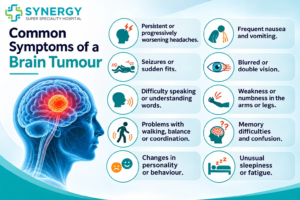
Common symptoms include:
Persistent or progressively worsening headaches.
Frequent nausea and vomiting.
Seizures or sudden fits.
Blurred or double vision.
Difficulty speaking or understanding words.
Weakness or numbness in the arms or legs.
Problems with walking, balance or coordination.
Memory difficulties and confusion.
Changes in personality or behaviour.
Unusual sleepiness or fatigue.
1. Persistent Headaches
Headaches can occur for many reasons, and most headaches are not caused by brain tumours. However, headaches that become progressively worse, occur with vomiting or are associated with neurological symptoms should be medically evaluated.
2. Seizures
A brain tumour may irritate surrounding brain tissues and cause abnormal electrical activity, resulting in seizures. A first-time seizure requires urgent medical assessment.
3. Vision and Hearing Problems
Tumours affecting specific brain regions or nearby nerves may cause blurred vision, double vision, hearing difficulties or other sensory changes.
4. Memory and Behavioural Changes
Some patients may experience difficulty concentrating, memory problems, confusion or changes in their usual behaviour. These symptoms can occur when a tumour affects areas responsible for cognitive functions.
5. Weakness and Balance Problems
Tumours affecting movement-related areas of the brain may cause weakness, numbness, difficulty walking or reduced coordination.
Symptoms alone cannot confirm the presence of a brain tumour. Proper clinical examination and diagnostic investigations are necessary.
Causes and Risk Factors of Brain Tumours
The exact cause of many brain tumours is not known. However, certain genetic conditions and medical factors may increase the risk of developing particular types of brain tumours.
Some recognised risk factors include:
Certain inherited genetic conditions.
Family history of specific tumour-related genetic syndromes.
Previous exposure to high-dose ionising radiation, particularly radiation therapy involving the head.
Certain immune system conditions associated with specific brain tumour types.
It is important to understand that having a risk factor does not necessarily mean a person will develop a brain tumour. Similarly, many people diagnosed with brain tumours have no identifiable risk factors.
Diagnosis of Brain Tumours
Accurate diagnosis plays an important role in deciding the most appropriate treatment. Brain Tumour Diagnosis in Bhopal may involve a neurological examination, imaging investigations and laboratory evaluation of tumour tissue.
The doctor selects diagnostic tests according to the patient’s symptoms, medical history and clinical findings.
1. Neurological Examination
A neurological examination helps assess how different parts of the nervous system are functioning.
It may include checking:
Muscle strength and movement.
Reflexes and coordination.
Balance and walking ability.
Vision and hearing.
Memory and concentration.
Speech and understanding.
These findings help doctors identify possible neurological abnormalities and determine which investigations may be needed.
2. MRI Brain Scan
Magnetic Resonance Imaging (MRI) is an important investigation for evaluating suspected brain tumours. It uses magnetic fields and radio waves to create detailed images of the brain.
An MRI scan can help doctors assess:
Tumour location and size.
Involvement of surrounding brain tissues.
Swelling around the tumour.
Relationship with nearby structures.
Changes that may suggest tumour growth.
A contrast-enhanced MRI may be recommended to provide additional information about the tumour.
3. CT Scan
A Computed Tomography (CT) scan uses X-rays to produce cross-sectional images of the brain. It may be useful in emergency situations and can help identify bleeding, swelling, certain structural changes and other abnormalities.
Depending on the clinical situation, CT and MRI may be used together.
4. Brain Biopsy
A brain biopsy involves collecting a small sample of tumour tissue for laboratory examination. The sample is studied by a pathologist to identify the tumour type and other important characteristics. A biopsy may be performed through an open surgical procedure or a stereotactic technique, depending on the tumour’s location and clinical requirements.
5. Molecular and Histopathological Testing
After tissue collection, specialised laboratory investigations may help identify the tumour’s cellular characteristics, grade and molecular changes. These findings can help specialists understand tumour behaviour and select suitable treatment options. Not every patient requires every investigation. The diagnostic plan depends on individual medical circumstances.
1. Craniotomy
Craniotomy is a surgical procedure in which a section of the skull is temporarily removed to provide access to the brain. During the procedure, the surgeon may remove the tumour or collect tissue samples for examination. The bone section is generally replaced after the surgery. Craniotomy may be considered for tumours that require surgical removal and are accessible through an appropriate operative approach.
2. Minimally Invasive Neurosurgery
Certain brain conditions may be suitable for minimally invasive surgical approaches. These techniques use specialised instruments and carefully planned access routes to reach selected areas of the brain. The suitability of minimally invasive surgery depends on tumour location, size and the patient’s clinical condition.
3. Stereotactic Brain Biopsy
Stereotactic biopsy uses computer-assisted imaging and three-dimensional guidance to collect a small tissue sample from a specific brain location. It may be considered when a tumour is located deep within the brain or when removing the entire tumour is not appropriate.
4. Endoscopic Neurosurgery
Endoscopic neurosurgery uses a thin instrument equipped with a camera to access selected areas of the brain through a small surgical opening or natural anatomical passage. It may be used for certain conditions, including selected tumours involving the pituitary region. It is not suitable for every brain tumour.
5. Surgery with Advanced Imaging Guidance
Image-guided neurosurgery uses preoperative imaging and computer-assisted navigation to help surgeons understand the location of a tumour and nearby structures.
Other Treatment Options for Brain Tumours
Surgery is not always the only treatment required. Some patients may need additional therapies depending on the tumour type, grade and surgical findings.
1. Radiation Therapy
Radiation therapy uses high-energy radiation to destroy tumour cells or slow their growth.
It may be recommended:
After surgery to treat remaining tumour cells.
When complete surgical removal is not possible.
For certain tumours that respond to radiation.
When surgery is not considered suitable.
Stereotactic radiosurgery is a specialised radiation technique that delivers focused radiation to a targeted area. Despite its name, it does not involve a surgical incision.
2. Chemotherapy
Chemotherapy uses medicines to destroy or control the growth of cancer cells. It may be recommended for certain malignant brain tumours, either after surgery or alongside radiation therapy. The medicines and treatment schedule depend on the specific tumour diagnosis.
3. Targeted Therapy
Targeted therapy uses medicines designed to act on particular molecular changes involved in tumour growth. These medicines may be appropriate for selected brain tumour types based on molecular testing.
4. Active Surveillance
Some slow-growing tumours that do not cause significant symptoms may be monitored through regular clinical examinations and imaging scans.
This approach is known as active surveillance. Treatment may be considered if the tumour grows or begins causing symptoms.
5. Supportive Treatment
Supportive care helps manage symptoms and treatment-related complications. Depending on the patient’s condition, doctors may prescribe medicines for seizures, brain swelling, pain or other symptoms. The treatment plan should be individualised rather than based on the tumour diagnosis alone.
Factors That Influence Brain Tumour Treatment
Not every brain tumour requires the same treatment. Several factors influence the selection of an appropriate medical or surgical approach.
Important considerations include:
Patient’s Age and General Health: Existing medical conditions and overall physical health can influence treatment decisions.
Tumour Size and Growth: Larger tumours or those causing significant pressure may require a different approach from small, slow-growing tumours.
Previous Treatment: Patients with recurrent tumours may need a revised treatment plan based on previous surgery, radiation or chemotherapy.
Importance of Choosing the Right Neurosurgical Care in Bhopal
Brain tumour management requires careful evaluation, accurate diagnosis and coordination between different medical specialists. Choosing a suitable healthcare facility is an important part of the treatment process.
Patients looking for a Brain Tumour Specialist in Saket Nagar, Bhopal, should consider the availability of qualified neurosurgical professionals, appropriate diagnostic investigations and multidisciplinary treatment support.
Some important factors to consider include:
Availability of qualified neurosurgeons.
Access to MRI and CT imaging facilities.
Appropriate surgical infrastructure.
Neurological and critical care support.
Access to pathology and tumour testing.
Coordination with radiation and medical oncology specialists.
Postoperative monitoring and rehabilitation.
Regular follow-up and treatment planning.
Patients searching for a Brain Tumour Treatment near DRM Road, Bhopal, should also enquire about the specific neurosurgical procedures and supporting facilities available at the hospital.
Brain Tumour Care at Synergy Super Speciality Hospital, Bhopal
Synergy Super Speciality Hospital is located in Saket Nagar, Bhopal. It is a multispeciality healthcare facility with different medical departments. Patients exploring Brain Tumour Treatment in Bhopal can enquire about the availability of neurosurgical consultation, diagnostic investigations, surgical facilities and associated specialist services at the hospital.
When considering a Brain Surgery Hospital near Sector 3D, Bhopal, patients should verify the availability of:
Neurosurgical consultation and evaluation.
MRI and CT scan facilities.
Brain tumour biopsy and pathology support.
Surgical and postoperative care.
Critical care facilities.
Oncology consultation and treatment coordination.
Follow-up and rehabilitation support.
Patients should confirm the availability of specific procedures and specialists directly with the hospital before planning treatment.
People searching for a Brain Tumour Hospital near Rani Kamlapati, Bhopal, can also compare available facilities, specialist experience and diagnostic support before making a healthcare decision.
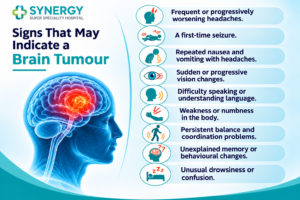
When Should You Consult a Neurosurgeon?
Early medical evaluation is important when a person experiences persistent or unusual neurological symptoms.
You should consider consulting a medical professional if you experience:
Frequent or progressively worsening headaches.
A first-time seizure.
Repeated nausea and vomiting with headaches.
Sudden or progressive vision changes.
Difficulty speaking or understanding language.
Weakness or numbness in the body.
Persistent balance and coordination problems.
Unexplained memory or behavioural changes.
Unusual drowsiness or confusion.
A sudden extremely severe headache, a first-time seizure, loss of consciousness or new neurological weakness requires emergency medical assessment.
People looking for a Neurosurgeon near Habibganj, Bhopal, should not delay evaluation when neurological symptoms are persistent or worsening.
How to Prepare for a Brain Tumour Consultation
Preparing for a medical appointment can help doctors understand the patient’s condition and medical history.
Consider carrying the following documents:
Previous MRI or CT scan reports.
Blood investigation reports, if available.
Previous biopsy or histopathology reports.
Current prescriptions and medication details.
Information about previous medical conditions.
Details about the symptoms and when they started.
Records of previous surgeries or cancer treatment.
Patients should also inform the doctor about any history of seizures, allergies or other significant medical conditions.
Frequently Asked Questions (FAQs)
1. What are the early symptoms of a brain tumour?
Early symptoms may include persistent headaches, seizures, nausea, vomiting, vision changes, memory problems and weakness. Symptoms depend on the tumour’s location, size and growth pattern.
2. Are all brain tumours cancerous?
No. Brain tumours can be benign or malignant. Benign tumours are non-cancerous, while malignant tumours are cancerous. Both types may require medical attention depending on their location and effects on surrounding brain structures.
3. How is a brain tumour diagnosed?
Diagnosis may involve a neurological examination, MRI scan, CT scan and brain biopsy. Histopathological and molecular testing may also be recommended to identify the tumour type and guide treatment.
4. Is surgery necessary for every brain tumour?
No. Some brain tumours can be monitored through regular imaging and clinical examinations. Others may require surgery, radiation therapy, chemotherapy or a combination of treatments.
5. What is a craniotomy?
Craniotomy is a surgical procedure in which a section of the skull is temporarily removed to provide access to the brain. It may be performed to remove a tumour or collect tissue samples for diagnosis.
6. Can a brain tumour be treated without surgery?
Yes. Depending on the tumour type and location, treatment may involve radiation therapy, chemotherapy, targeted therapy or active surveillance. The appropriate approach is decided after medical evaluation.
7. What is the role of MRI in brain tumour diagnosis?
MRI provides detailed images of the brain and helps doctors assess the tumour’s size, location and relationship with surrounding tissues. Contrast-enhanced MRI may provide additional diagnostic information.
8. What is stereotactic brain biopsy?
Stereotactic brain biopsy is a specialised procedure that uses imaging guidance to collect a small tissue sample from a specific brain location. It may be recommended for tumours located deep within the brain.
9. Where can I find a Brain Tumour Specialist in Saket Nagar, Bhopal?
Patients can enquire at healthcare facilities in Saket Nagar about neurosurgical consultations, specialist availability and diagnostic services. It is important to verify the doctor’s qualifications and hospital facilities before choosing a treatment provider.
10. What factors determine the treatment of a brain tumour?
Treatment depends on the tumour type, grade, size, location, growth rate, patient’s age and general health. Previous treatments and molecular test results may also influence the treatment plan.
Conclusion – Brain Tumour Treatment in Bhopal
Brain tumours are complex medical conditions that require accurate diagnosis, careful treatment planning and regular medical follow-up. Advances in diagnostic imaging, surgical navigation, stereotactic procedures, radiation therapy and tumour testing have expanded the available treatment approaches. However, the most appropriate option depends on the individual patient’s diagnosis and overall health.
Brain Tumour Treatment in Bhopal requires proper assessment of the tumour’s characteristics and coordination between relevant medical specialists. Patients exploring healthcare options in Saket Nagar, Habibganj, Arera Colony, Shahpura and nearby areas should enquire about specialist availability, diagnostic facilities and neurosurgical support. Synergy Super Speciality Hospital, located at 33–34, Sector 3D, DRM Road, Saket Nagar, Bhopal, offers a multispeciality healthcare setting.