Medical emergencies can happen at any time, during the day or late at night. Sudden chest pain, difficulty breathing, severe abdominal pain, serious injuries, or loss of consciousness may require immediate medical attention. Recognising these warning signs and knowing where to seek help can make an important difference in receiving timely treatment.
People searching for a 24 Hour Emergency Hospital in Bhopal often want to understand which symptoms require urgent care, what services an emergency department may provide, and how to choose a suitable healthcare facility. The right hospital depends on the patient’s condition, the availability of the required medical team, diagnostic facilities, and the level of emergency support needed.
Bhopal has government hospitals, private hospitals, and multispeciality healthcare facilities that serve patients from different parts of the city. Synergy Super Speciality Hospital, located in Saket Nagar, Bhopal, lists several medical and surgical specialities, including cardiology, neurosurgery, lung care, general surgery, orthopaedics, urology, and critical care.However, patients should confirm the hospital’s current emergency arrangements and ability to manage their specific condition before visiting.
This guide explains common medical emergencies, when to seek immediate care, what to check before choosing a hospital, and how patients from Saket Nagar, Habibganj, Arera Colony, and nearby areas can prepare for urgent medical situations.
Understanding Emergency Medical Care
Emergency medical care involves the assessment and treatment of sudden illnesses or injuries that may threaten life, cause serious complications, or require prompt intervention. Unlike routine consultations, emergency care prioritises patients according to the severity of their condition.
For example, a patient experiencing severe chest pain or sudden breathing difficulty may require immediate assessment, while a person with a minor injury may be able to wait safely.
When looking for an Emergency Hospital in Bhopal, patients should consider the hospital’s ability to assess urgent symptoms, stabilise patients, arrange necessary investigations, and provide appropriate treatment or transfer when required.
What Conditions May Require Emergency Treatment?
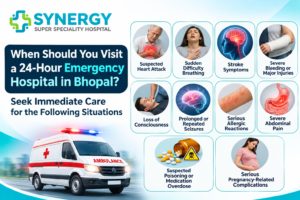
Medical emergencies can include:
Suspected heart attack
Sudden difficulty breathing
Stroke symptoms
Severe bleeding or major injuries
Loss of consciousness
Prolonged or repeated seizures
Serious allergic reactions
Severe abdominal pain
Suspected poisoning or medication overdose
Serious pregnancy-related complications
The urgency of treatment depends on the symptoms, their severity, and the patient’s medical history. If a potentially life-threatening condition is suspected, call emergency services rather than delaying care to compare hospitals.
10 Warning Signs That Require Immediate Medical Attention
Recognising emergency symptoms can help patients and their families respond appropriately. Some serious conditions develop suddenly, while others begin with symptoms that worsen over time.
1. Chest Pain or Suspected Heart Attack
Chest pain or pressure can be a warning sign of a heart attack. Patients may describe the sensation as tightness, heaviness, squeezing, or discomfort in the chest. The pain may spread to the arm, shoulder, back, neck, or jaw. Other symptoms can include sweating, nausea, dizziness, and breathlessness. Some people experience less typical symptoms, particularly older adults and people with diabetes. If a heart attack is suspected, call emergency services immediately. Do not wait for the pain to disappear or attempt to drive yourself to the hospital.
2. Sudden Difficulty Breathing
Sudden or severe breathlessness may be associated with asthma, a severe allergic reaction, a lung condition, a heart problem, or another serious illness. Warning signs include difficulty speaking because of breathlessness, bluish lips, confusion, chest discomfort, or rapidly worsening breathing. People experiencing these symptoms require immediate medical assessment. An Emergency Hospital in Bhopal should be able to assess the patient’s condition and provide or arrange the necessary level of care. Do not delay treatment for severe breathing difficulty while trying home remedies or waiting for a routine appointment.
3. Symptoms of a Stroke
A stroke occurs when blood flow to part of the brain is interrupted or bleeding occurs within the brain. Early treatment can be time-sensitive.
Remember the FAST warning signs:
Face: One side of the face droops.
Arms: One arm becomes weak or difficult to raise.
Speech: Speech becomes slurred or difficult to understand.
Time: Seek emergency assistance immediately.
Other symptoms may include sudden vision problems, confusion, loss of balance, or a severe headache. Note the time the symptoms started, if known. Do not give food, drinks, or medicines unless instructed by medical professionals.
4. Severe Bleeding or Major Injuries
Road accidents, falls, workplace incidents, and other traumatic events can cause serious injuries. Heavy bleeding, suspected fractures, head injuries, and injuries involving the chest or abdomen require prompt evaluation. If a person is bleeding heavily, apply firm, continuous pressure to the wound with a clean cloth or dressing when safe to do so. Call emergency services and follow their instructions. Avoid moving someone with a suspected spinal injury unless there is an immediate environmental danger.
5. Loss of Consciousness or Seizures
Sudden loss of consciousness may occur because of heart rhythm problems, low blood sugar, neurological conditions, or other medical causes. Seek emergency assistance if a person does not regain consciousness promptly, has difficulty breathing, is seriously injured, or experiences repeated episodes. During a seizure, protect the person from nearby hazards and time the episode. Do not restrain their movements or put anything inside their mouth. A seizure lasting five minutes or longer, repeated seizures without recovery, or a first seizure requires urgent medical assistance.
6. Severe Abdominal Pain
Sudden or intense abdominal pain may be associated with appendicitis, intestinal obstruction, internal bleeding, or other urgent conditions. Seek immediate assessment if the pain is severe, rapidly worsening, or accompanied by persistent vomiting, fainting, a rigid abdomen, significant bleeding, or other concerning symptoms. Severe abdominal pain during pregnancy also requires prompt medical evaluation. Avoid taking leftover prescription medicines or delaying treatment while trying to determine the cause yourself.
7. Serious Allergic Reactions
A severe allergic reaction, known as anaphylaxis, can progress rapidly and become life-threatening. Warning signs may include swelling of the tongue or throat, difficulty breathing, dizziness, collapse, or widespread hives accompanied by other symptoms. Call emergency services immediately if anaphylaxis is suspected. If the person has a prescribed adrenaline auto-injector, help them use it according to their emergency instructions. Emergency evaluation remains necessary even if symptoms begin to improve.
8. Fever With Severe Symptoms
Fever can accompany common infections, but certain associated symptoms may indicate a serious illness. Seek urgent assessment if fever occurs with confusion, difficulty breathing, a stiff neck, seizures, severe dehydration, unusual drowsiness, or a rash that does not fade under pressure. Infants, older adults, and people with weakened immune systems may require particular attention when a serious infection is suspected.
9. Suspected Poisoning or Medication Overdose
Accidental ingestion of chemicals, excessive medication, or a potentially toxic substance can cause serious complications, even if symptoms are not immediately noticeable. Contact emergency services or an appropriate poison information service for guidance. Do not induce vomiting or give home remedies unless specifically instructed by a qualified professional. If possible, keep the substance container or medicine packaging available for the treating team. Do not delay treatment to collect these items.
10. Pregnancy-Related Emergencies
Some symptoms during pregnancy require urgent medical evaluation. These include heavy vaginal bleeding, severe abdominal pain, seizures, fainting, or severe breathlessness. A severe headache with visual changes or significant upper abdominal pain may also require urgent assessment, particularly during later pregnancy. Pregnant patients should follow the emergency instructions provided by their obstetric team. Severe or potentially life-threatening symptoms should never wait for the next scheduled antenatal appointment.
What Services Should You Check Before Choosing an Emergency Hospital?
Hospitals differ in the emergency services and specialist support they can provide. Patients should confirm the facility’s actual capabilities, particularly when a specific condition requires urgent intervention.
Emergency Assessment and Stabilisation
Emergency teams assess symptoms, vital signs, medical history, and immediate risks. Initial treatment may focus on stabilising breathing, circulation, consciousness, or severe bleeding.
Diagnostic Investigations
Depending on the condition, investigations may include blood tests, ECG, X-rays, ultrasound, CT scans, or other assessments. Availability can vary by facility and time. Patients arranging non-life-threatening urgent care should ask whether the required investigation can be performed promptly.
Specialist Availability
Some emergencies require input from cardiology, neurology, general surgery, orthopaedics, respiratory medicine, obstetrics, or other specialties. Confirm whether the relevant specialist is available and whether the hospital can manage the condition or arrange a transfer if needed.
Critical Care Support
Patients with severe illnesses may require continuous monitoring, respiratory support, or intensive care. Confirm whether the required critical care facilities and staff are available.
Ambulance and Transfer Arrangements
Ambulance services and inter-hospital transfer arrangements may be important when a patient requires specialist treatment elsewhere.
In a life-threatening emergency, call India’s emergency number, 112, and follow the dispatcher’s instructions.
Emergency Healthcare Services at Synergy Super Speciality Hospital, Bhopal
Synergy Super Speciality Hospital is located in Saket Nagar, Bhopal, and lists multiple specialist departments, including cardiology, neurosurgery, lung care, general surgery, orthopaedics, urology, obstetrics and gynaecology, gastroenterology, and critical care.
These specialties are relevant to different medical conditions, but their listing alone does not establish that every emergency service or specialist is available around the clock.
Patients considering the hospital for urgent medical care should confirm:
Whether emergency assessment is available at the time of arrival.
Whether the required specialist is available.
Whether the necessary diagnostic investigations can be performed.
Whether critical care or emergency surgery is available when needed.
Whether ambulance or transfer arrangements can be provided.
Which contact number should be used for urgent assistance.
For potentially life-threatening symptoms, contact emergency services immediately and follow their advice about the appropriate facility.
How Emergency Departments Prioritise Patients
Emergency departments commonly use triage to determine which patients need attention first.
Life-Threatening Conditions
Patients with severely compromised breathing, circulation, consciousness, or other critical symptoms require immediate assessment and treatment.
Urgent Conditions
Patients with potentially serious symptoms may need prompt evaluation, investigations, observation, or treatment depending on their condition.
Less Urgent Conditions
Patients with minor, stable problems may wait longer when more seriously ill patients require immediate attention.
This means that treatment order is not always based on arrival time. If symptoms worsen while waiting, inform emergency staff immediately.
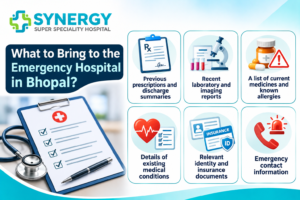
What Should You Carry During an Emergency Hospital Visit?
Treatment should never be delayed to collect documents. If the following items are readily available, they may help the medical team:
Previous prescriptions and discharge summaries
Recent laboratory and imaging reports
A list of current medicines and known allergies
Details of existing medical conditions
Relevant identity and insurance documents
Emergency contact information
Explain when the symptoms began, what happened before they started, and whether the patient took any medication.
If poisoning or overdose is suspected, share information about the substance, approximate amount, and time of exposure if known.
Emergency Hospital Near Saket Nagar, Habibganj and Arera Colony
Location can influence how quickly patients reach appropriate medical care. Residents should identify suitable healthcare facilities before an emergency occurs.
Emergency Hospital in Saket Nagar, Bhopal
People searching for an Emergency Hospital in Saket Nagar, Bhopal, can review facilities in the locality, including Synergy Super Speciality Hospital. Confirm its current emergency arrangements and whether it can manage the particular medical condition.
Emergency Hospital Near Habibganj, Bhopal
Residents searching for an Emergency Hospital near Habibganj, Bhopal, should consider the patient’s condition, travel time, and the required medical services.
For serious symptoms, call emergency services rather than delaying treatment to compare facilities.
Emergency Hospital Near Arera Colony, Bhopal
People looking for an Emergency Hospital near Arera Colony, Bhopal, can identify nearby facilities and check their emergency capabilities in advance.
The appropriate destination depends on the patient’s condition. A facility with the required specialist and emergency resources may be more suitable than a closer hospital that cannot manage the emergency.
Emergency Hospital Near DRM Road, Bhopal
Synergy Super Speciality Hospital is listed at 33–34, Sector 3D, DRM Road, Saket Nagar, Bhopal, according to the provided hospital information.
Patients should verify the address, current emergency services, and relevant department availability directly with the hospital.
For suspected heart attack, stroke, severe injury, or breathing emergencies, do not delay medical assistance while checking directions or contacting multiple facilities.
How to Prepare for Medical Emergencies at Home
Preparation can help families respond more effectively when someone becomes seriously ill or injured.
Keep Emergency Numbers Accessible
Save emergency numbers on your phone and ensure family members know how to call for assistance.
Maintain an Updated Medicine List
Keep a current list of prescribed medicines, allergies, and significant medical conditions, particularly for older adults and people with chronic illnesses.
Identify Appropriate Healthcare Facilities
Know which nearby hospitals can manage the medical conditions most relevant to your household. Confirm their services instead of relying solely on online listings.
Learn Basic First Aid
Basic first-aid training can help people respond safely while waiting for professional assistance. CPR training can also help people recognise cardiac arrest and respond appropriately.
Do Not Rely on Home Remedies for Serious Symptoms
Home remedies cannot replace emergency treatment for severe chest pain, stroke symptoms, major bleeding, anaphylaxis, or other potentially life-threatening conditions.
When uncertain about the seriousness of symptoms, seek professional guidance promptly.
Frequently Asked Questions About Emergency Hospitals in Bhopal
1. When should I visit a 24-hour emergency hospital in Bhopal?
Seek emergency care for severe chest pain, sudden breathing difficulty, stroke symptoms, major injuries, uncontrolled bleeding, loss of consciousness, serious allergic reactions, or other potentially life-threatening conditions. Call emergency services when necessary.
2. Does Synergy Super Speciality Hospital provide emergency treatment?
Synergy Super Speciality Hospital lists multiple specialist healthcare services. Contact the hospital to confirm its current emergency department availability, staffing, and ability to manage the specific condition. In a life-threatening emergency, call 112.
3. What is the difference between emergency care and a routine consultation?
Emergency care prioritises potentially life-threatening or serious conditions requiring immediate assessment. Routine consultations generally address stable conditions that can safely be evaluated through scheduled appointments.
4. Which symptoms require immediate hospital attention?
Severe chest pain, sudden breathlessness, stroke symptoms, major bleeding, fainting with concerning symptoms, prolonged seizures, and serious allergic reactions require urgent medical assistance.
5. Should I call an ambulance or travel to the hospital myself?
For suspected heart attack, stroke, severe breathing difficulty, major trauma, or another life-threatening condition, call emergency services and follow their instructions. Do not drive yourself if you may deteriorate during the journey.
6. What should I bring to an emergency department?
If readily available, bring previous prescriptions, medical reports, a list of medicines and allergies, relevant identification, and insurance details. Do not delay emergency treatment to collect paperwork.
7. Can emergency departments treat children and pregnant women?
Emergency services may assess children and pregnant women, but specialised paediatric or obstetric facilities vary between hospitals. Confirm the relevant capabilities when possible, and seek immediate assistance for life-threatening symptoms.
8. How do hospitals decide which emergency patient is treated first?
Emergency teams use triage to prioritise patients according to the severity of their condition and the urgency of treatment. Patients with life-threatening symptoms receive priority over those with stable, less urgent problems.
9. Where can I find an emergency hospital near Saket Nagar, Bhopal?
Synergy Super Speciality Hospital is located in Saket Nagar, Bhopal. Verify its current emergency services and suitability for the specific condition before travelling, unless emergency services direct you there.
10. What should I do if symptoms worsen while waiting at the hospital?
Immediately inform the emergency staff if the patient’s breathing, consciousness, pain, bleeding, or other symptoms worsen. Emergency teams can reassess the patient’s condition and determine whether more urgent treatment is required.
Conclusion: Choosing Appropriate Emergency Care in Bhopal
Medical emergencies require prompt decisions, accurate assessment, and access to appropriate treatment. Recognising warning signs such as severe chest pain, sudden breathlessness, stroke symptoms, major injuries, and loss of consciousness can help patients and families respond without unnecessary delay.
When evaluating an Emergency Hospital in Bhopal, consider the availability of emergency assessment, specialist support, diagnostic facilities, critical care, and transfer arrangements. The most appropriate facility depends on the patient’s condition and the treatment required.
Synergy Super Speciality Hospital in Saket Nagar lists several medical and surgical specialties. Patients should verify its current emergency arrangements and ability to manage their specific condition directly with the hospital.
Residents of Saket Nagar, Habibganj, Arera Colony, DRM Road, and surrounding localities can prepare by identifying suitable healthcare facilities and keeping essential medical information accessible.
If you are searching for the Best Hospital in Indore, evaluate facilities according to the same principles: relevant specialist availability, emergency capabilities, diagnostic support, and the patient’s clinical needs. Since Indore and Bhopal are different cities, confirm the hospital’s actual location before travelling.
Most importantly, never delay emergency treatment to compare hospitals when a life-threatening condition is suspected. Call 112 or the appropriate local emergency service and follow professional instructions.