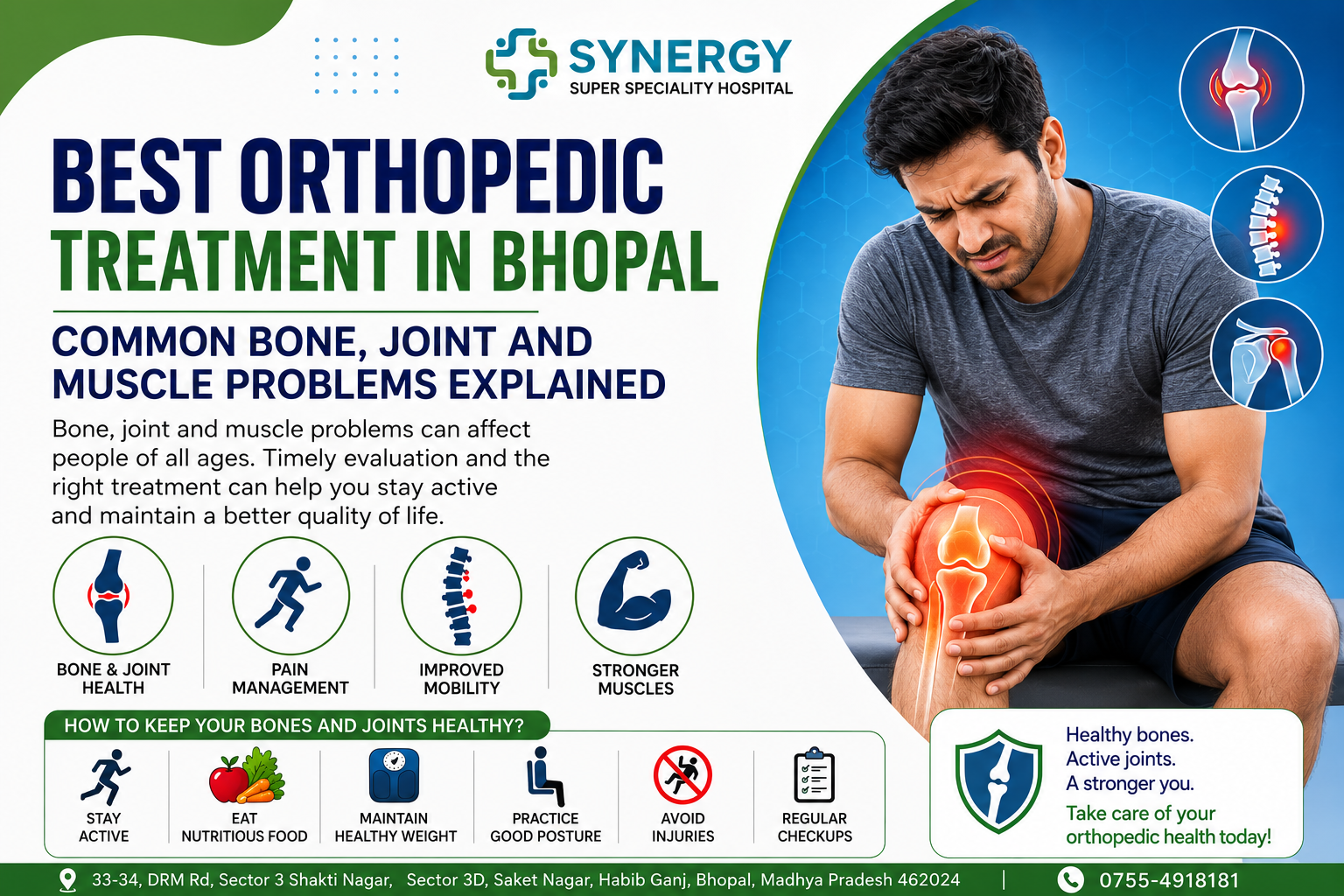
Best Orthopedic Treatment in Bhopal begins with understanding the cause of bone, joint, muscle, ligament, or tendon problems rather than treating pain alone. Orthopedic conditions can affect people of different ages and may develop because of injuries, repeated physical stress, age-related changes, poor posture, or certain medical conditions. Some problems cause sudden pain after an injury, while others develop gradually and may initially appear as mild stiffness or discomfort.
The musculoskeletal system includes bones, joints, muscles, ligaments, tendons, and other supporting tissues that help the body move and remain stable. When any of these structures is affected, everyday activities such as walking, climbing stairs, lifting objects, or sitting for long periods may become uncomfortable. Understanding the symptoms and obtaining an appropriate medical evaluation can help identify the underlying problem.
If pain continues, movement becomes restricted, swelling develops, or an injury does not improve as expected, discussing the problem with an orthopedic professional may be appropriate. The treatment approach depends on the affected body part, severity of the condition, medical history, examination findings, and diagnostic reports.
What Does Orthopedic Care Include?
Orthopedic care focuses on conditions affecting the musculoskeletal system. This includes problems involving bones, joints, muscles, cartilage, ligaments, tendons, and related structures.
An Orthopedic Doctor in Bhopal may evaluate conditions affecting the:
- Knee
- Hip
- Shoulder
- Elbow
- Wrist
- Hand
- Ankle
- Foot
- Spine
- Bones and muscles
Orthopedic care is not limited to fractures or surgery. Many musculoskeletal problems can initially be managed through appropriate activity modification, physiotherapy, medicines when indicated, exercises, or other non-surgical approaches.
The appropriate treatment depends on the diagnosis. A person with a ligament injury may require a different approach from someone experiencing age-related joint changes. Similarly, treatment for a fracture depends on its location, type, and severity.
Common Bone Problems
Bones provide structural support to the body and protect important organs. Bone problems can result from injuries, falls, sports activities, nutritional factors, ageing, or underlying health conditions.
Common bone-related conditions include:
- Fractures
- Stress fractures
- Osteoporosis-related fractures
- Bone infections
- Bone deformities
- Bone pain
- Certain bone growth abnormalities
A fracture can occur after a significant injury, but weakened bones may fracture after relatively minor trauma. Persistent bone pain without an obvious injury should also be medically evaluated.
An Orthopedic Specialist in Bhopal can examine the affected area and determine whether imaging or additional investigations are required. Depending on the problem, treatment may involve immobilisation, medication, physiotherapy, or a procedure.

Common Joint Problems
Joints allow bones to move relative to one another. Joint problems can affect mobility and may cause pain, stiffness, swelling, clicking, or reduced range of motion.
Common joint conditions include:
- Osteoarthritis
- Rheumatoid arthritis
- Joint sprains
- Ligament injuries
- Meniscus injuries
- Joint inflammation
- Dislocations
- Cartilage problems
- Frozen shoulder
Knee and shoulder problems are particularly noticeable because these joints are involved in many everyday activities. Pain while walking, climbing stairs, standing from a chair, reaching overhead, or carrying objects may indicate a musculoskeletal issue.
A Knee Pain Treatment in Bhopal evaluation may involve physical examination and, when clinically appropriate, imaging such as an X-ray or MRI. Treatment depends on the cause rather than simply the intensity of pain.
Common Muscle and Tendon Problems
Muscles and tendons can become painful because of overuse, sudden movements, sports injuries, poor mechanics, or repetitive physical activity.
Common problems include:
- Muscle strains
- Tendinitis
- Tendon injuries
- Muscle cramps
- Overuse injuries
- Sports-related muscle problems
Symptoms may include pain during movement, tenderness, swelling, weakness, or difficulty using the affected body part.
Rest and activity modification may be useful for certain minor injuries, but persistent symptoms should not be ignored. Repeated pain may indicate an underlying problem that requires proper evaluation.
Signs and Symptoms That Need Attention
Musculoskeletal symptoms can vary depending on the affected structure and underlying condition.
Common symptoms include:
- Joint pain
- Bone pain
- Muscle pain
- Swelling
- Stiffness
- Limited movement
- Weakness
- Tenderness
- Difficulty walking
- Difficulty using an arm or hand
- Pain after an injury
- Recurrent pain during physical activity
Some symptoms may improve with rest, while others can persist or gradually worsen.
For people experiencing Joint Pain Treatment in Bhopal, identifying the exact source of the pain is important because joint discomfort can result from arthritis, injury, inflammation, cartilage problems, or other conditions.
When Should You See an Orthopedic Doctor?
Not every episode of muscle or joint discomfort requires specialist care. However, medical evaluation may be appropriate when pain persists, interferes with normal activities, or follows a significant injury.
You may consider seeing an orthopedic professional if:
- Pain continues for several days or weeks
- Joint swelling does not improve
- Movement becomes restricted
- You cannot put weight on an injured leg
- A joint appears deformed after an injury
- Pain repeatedly returns during activity
- There is persistent weakness
- You experience frequent falls
- A previous injury continues to cause problems
- Everyday activities become difficult
An Orthopedic Doctor in Bhopal can assess the symptoms, perform a physical examination, review medical history, and determine whether further investigations are required.
Understanding Knee Pain
Knee pain is one of the common reasons people seek orthopedic evaluation. It can occur because of injury, arthritis, overuse, ligament problems, cartilage damage, or other conditions.
Knee symptoms may include:
- Pain while walking
- Pain while climbing stairs
- Stiffness after sitting
- Swelling
- Difficulty bending the knee
- Clicking or catching
- Feeling of instability
The cause of knee pain cannot always be determined from symptoms alone. An examination can help identify whether the problem may involve the joint, ligament, tendon, cartilage, or surrounding muscles.
Knee Pain Treatment in Bhopal depends on the underlying diagnosis. Depending on the condition, management may include exercises, physiotherapy, activity modification, medicines, supportive devices, injections in selected cases, or surgery when indicated.
Understanding Back and Neck Pain
Back and neck pain can develop from muscle strain, posture-related stress, disc problems, injuries, age-related changes, or other spinal conditions.
Common symptoms include:
- Lower back pain
- Neck stiffness
- Pain after prolonged sitting
- Pain radiating into an arm or leg
- Muscle tightness
- Reduced movement
Most cases require assessment based on the symptoms and examination findings rather than automatically assuming that imaging or surgery is necessary.
If back pain is accompanied by significant weakness, loss of bladder or bowel control, numbness around the genital or inner-thigh region, or other severe symptoms, urgent medical evaluation is important.
How Are Orthopedic Problems Diagnosed?
Diagnosis begins with understanding the patient’s symptoms and medical history. A physical examination helps assess movement, strength, tenderness, swelling, stability, and other relevant findings.
Depending on the suspected condition, an orthopedic professional may recommend:
X-Ray
X-rays can help evaluate bones and certain joint changes. They are commonly used when a fracture or structural bone problem is suspected.
MRI
MRI provides detailed images of soft tissues and may help evaluate ligaments, tendons, cartilage, muscles, and certain spinal conditions.
CT Scan
CT imaging can provide detailed information about bones and complex fractures in selected situations.
Blood Tests
Blood investigations may be considered when inflammation, infection, metabolic problems, or certain systemic conditions are suspected.
Not every patient requires every test. The choice depends on the symptoms, examination, medical history, and suspected diagnosis.
What Is Involved in Best Orthopedic Treatment in Bhopal?
Best Orthopedic Treatment in Bhopal is based on the specific musculoskeletal problem rather than a single treatment method. Some conditions improve with conservative care, while others may require an injection, procedure, or surgery.
Treatment may include:
- Activity modification
- Physiotherapy
- Therapeutic exercises
- Medicines when prescribed
- Braces or supportive devices
- Weight management when relevant
- Injections in selected conditions
- Fracture management
- Minimally invasive procedures
- Surgery when medically indicated
The goal is to address the underlying condition and support safe movement and function.
Treatment should not be selected only because a particular procedure is popular. A medical professional can explain the available options and their potential benefits and limitations based on the individual diagnosis.
Can Physiotherapy Help Orthopedic Conditions?
Physiotherapy can form an important part of treatment for many musculoskeletal conditions. It may focus on improving strength, flexibility, balance, mobility, posture, and functional movement.
A physiotherapy programme may include:
- Stretching exercises
- Strengthening exercises
- Range-of-motion exercises
- Balance training
- Mobility exercises
- Posture correction
- Activity-specific rehabilitation
For some patients, Physiotherapy for Joint Pain in Bhopal may be recommended alongside other treatment approaches. The exercises should be appropriate for the specific condition because performing unsuitable exercises may increase discomfort or delay recovery.
A rehabilitation plan may also change over time as movement and strength improve.
When Is Orthopedic Surgery Considered?
Surgery is not necessary for every orthopedic condition. Many problems can be managed through non-surgical treatment, particularly when symptoms are mild or moderate and there is no major structural damage requiring an operation.
Surgery may be considered in selected cases involving:
- Certain fractures
- Severe joint damage
- Significant ligament injuries
- Advanced arthritis
- Persistent symptoms despite appropriate conservative treatment
- Certain spinal conditions
- Joint instability
- Structural problems affecting function
An Orthopedic Surgeon in Bhopal can explain whether surgery is appropriate after considering examination findings and diagnostic reports.
The decision should be based on the individual’s condition, symptoms, functional limitations, treatment response, and overall health.
Managing Arthritis and Age-Related Joint Changes
Arthritis can cause pain, stiffness, swelling, and reduced movement. Osteoarthritis commonly affects weight-bearing joints such as the knees and hips, although other joints can also be involved.
Age-related changes do not mean that persistent pain should simply be accepted as unavoidable. Appropriate evaluation can help determine whether symptoms are related to arthritis or another condition.
Management may include:
- Physical activity
- Strengthening exercises
- Weight management where appropriate
- Physiotherapy
- Medicines when prescribed
- Supportive devices
- Injections in selected cases
- Surgery for specific advanced conditions
Arthritis Treatment in Bhopal should be tailored to the type and severity of arthritis and the patient’s functional needs.
Bone Health and Osteoporosis
Bone health becomes increasingly important with age. Osteoporosis can reduce bone strength and increase the risk of fractures.
Factors associated with bone health include:
- Age
- Physical activity
- Nutrition
- Calcium and vitamin D status
- Hormonal factors
- Certain medicines
- Previous fractures
- Family history
A person with risk factors for weak bones may require evaluation based on their individual situation. Bone-density testing may be recommended for selected people.
Preventing falls, maintaining appropriate physical activity, and addressing nutritional or medical concerns can be important parts of maintaining bone health.
Sports and Activity-Related Injuries
Sports and physical activities can place stress on muscles, tendons, ligaments, and joints. Injuries may occur because of sudden movements, falls, direct impact, repetitive loading, or inadequate recovery.
Common sports injuries include:
- Sprains
- Muscle strains
- Ligament injuries
- Tendon injuries
- Dislocations
- Fractures
- Overuse injuries
Returning to activity too quickly after an injury may increase the risk of continued symptoms. Rehabilitation and a gradual return to normal activity can be important depending on the injury.
How Can You Support Bone and Joint Health?
Daily habits can contribute to musculoskeletal health. Regular movement, appropriate exercise, balanced nutrition, and maintaining a healthy body weight can support overall physical function.
Useful habits may include:
- Staying physically active
- Performing suitable strengthening exercises
- Maintaining flexibility
- Avoiding prolonged inactivity
- Using appropriate techniques while lifting
- Maintaining a balanced diet
- Taking adequate rest after strenuous activity
- Following rehabilitation instructions after an injury
People with an existing orthopedic condition should choose activities according to their medical advice and physical limitations.
Why Early Orthopedic Evaluation Matters
Ignoring persistent musculoskeletal pain can sometimes allow an underlying condition to continue without appropriate management. Early evaluation can help clarify whether the problem is related to an injury, arthritis, inflammation, overuse, or another cause.
Best Orthopedic Treatment in Bhopal should begin with an accurate understanding of the condition. This helps avoid treating every type of pain in the same way.
For example, knee pain after an injury may require a different evaluation from gradual knee pain associated with age-related joint changes. Similarly, shoulder pain can originate from the rotator cuff, joint, tendon, or surrounding structures.
Getting the right diagnosis is therefore an important part of orthopedic care.
Choosing an Orthopedic Hospital for Bone and Joint Care
When looking for Best Orthopedic Treatment in Bhopal, patients may consider several practical factors rather than focusing only on a hospital name.
These may include:
- Availability of orthopedic professionals
- Appropriate diagnostic facilities
- Access to physiotherapy and rehabilitation
- Evaluation of both surgical and non-surgical options
- Emergency care for injuries when required
- Follow-up facilities
- Clear explanation of diagnosis and treatment options
For a patient with ongoing pain or a previous injury, access to appropriate evaluation and follow-up can make the treatment process easier to understand.
How Can an Orthopedic Specialist Help?
An Orthopedic Specialist in Bhopal can evaluate problems affecting bones, joints, muscles, ligaments, tendons, and other musculoskeletal structures.
During an evaluation, the specialist may review:
- Symptoms and their duration
- Previous injuries
- Physical activity
- Medical history
- Current medicines
- Previous treatment
- X-rays or other imaging
- Physical examination findings
Based on these factors, the doctor can determine whether conservative treatment, rehabilitation, additional testing, a procedure, or surgery may be appropriate.
Patients can make their appointment more useful by bringing previous imaging reports, prescriptions, investigation reports, and details of earlier treatments.
Best Orthopedic Treatment in Bhopal at SYNERGY SUPERSPECIALITY HOSPITAL
For individuals searching for Best Orthopedic Treatment in Bhopal, SYNERGY SUPERSPECIALITY HOSPITAL provides medical care across multiple specialties, where patients can discuss musculoskeletal concerns and understand the appropriate next steps based on their condition.
The hospital is located at 33–34, DRM Road, Sector 3D, Saket Nagar, Habib Ganj, Bhopal, Madhya Pradesh 462024.
Patients experiencing bone, joint, muscle, or injury-related concerns can carry previous X-rays, MRI reports, prescriptions, and relevant medical records when seeking an evaluation. These documents can help the healthcare professional understand the history of the condition.
When considering orthopedic care, patients should focus on appropriate diagnosis, suitable treatment options, rehabilitation when needed, and follow-up according to their individual medical requirements.
When Should Orthopedic Pain Not Be Ignored?
Some symptoms require more prompt attention, particularly after an injury.
Seek medical evaluation when there is:
- Severe pain after an accident or fall
- Visible deformity
- Inability to bear weight
- Significant swelling
- Sudden loss of movement
- Persistent numbness or weakness
- Severe pain that does not improve
- Repeated joint instability
- Symptoms that interfere with daily activities
In cases of major trauma, severe pain, suspected fracture, or significant loss of function, timely medical evaluation is important.
Frequently Asked Questions About Orthopedic Treatment in Bhopal
What is Best Orthopedic Treatment in Bhopal?
Best Orthopedic Treatment in Bhopal depends on the underlying bone, joint, muscle, ligament, or tendon condition. Treatment may include physiotherapy, exercises, medicines, supportive devices, injections, procedures, or surgery when medically indicated.
Who can provide Best Orthopedic Treatment in Bhopal?
Best Orthopedic Treatment in Bhopal may involve evaluation by an orthopedic professional who can assess symptoms, perform a physical examination, review previous reports, and recommend appropriate treatment based on the diagnosis.
What does an Orthopedic Doctor in Bhopal treat?
An Orthopedic Doctor in Bhopal can evaluate conditions affecting bones, joints, muscles, ligaments, tendons, and related structures. These may include fractures, arthritis, sports injuries, ligament problems, joint pain, and certain spine-related conditions.
When should I see an Orthopedic Specialist in Bhopal?
An Orthopedic Specialist in Bhopal may be appropriate when musculoskeletal pain persists, movement becomes restricted, swelling continues, an injury does not improve, or symptoms interfere with everyday activities.
What is included in Knee Pain Treatment in Bhopal?
Knee Pain Treatment in Bhopal depends on the cause of the pain. Evaluation may include physical examination and, when appropriate, X-rays or MRI. Treatment can involve exercises, physiotherapy, activity modification, medicines, injections, or surgery in selected cases.
Can Joint Pain Treatment in Bhopal be non-surgical?
Yes, Joint Pain Treatment in Bhopal may involve non-surgical approaches such as physiotherapy, exercises, activity modification, medicines, weight management, or supportive devices, depending on the underlying condition.
Is physiotherapy useful for orthopedic problems?
Physiotherapy for Joint Pain in Bhopal may help selected patients improve strength, flexibility, mobility, balance, and function. The exercises should be selected according to the person’s diagnosis and physical condition.
When is an Orthopedic Surgeon in Bhopal needed?
An Orthopedic Surgeon in Bhopal may evaluate patients when surgery could be appropriate for certain fractures, advanced joint damage, significant ligament injuries, persistent symptoms, or other structural problems.
What is involved in Arthritis Treatment in Bhopal?
Arthritis Treatment in Bhopal depends on the type and severity of arthritis. Management may include physical activity, strengthening exercises, physiotherapy, medicines, weight management, injections in selected cases, and surgery for certain advanced conditions.
Can orthopedic problems affect younger people?
Yes. Younger people can experience fractures, sports injuries, ligament problems, tendon injuries, muscle strains, and other musculoskeletal conditions. Age alone does not determine whether orthopedic evaluation is needed.
Can orthopedic problems improve without surgery?
Some orthopedic conditions can improve with non-surgical treatment. Depending on the diagnosis, management may include rest or activity modification, physiotherapy, exercises, medicines, and supportive devices. The appropriate approach depends on the specific condition.
How are orthopedic conditions diagnosed?
Diagnosis may involve a medical history, physical examination, and selected investigations. Depending on the suspected problem, an orthopedic professional may recommend X-rays, MRI, CT scans, blood tests, or other assessments.
Where can I find Best Orthopedic Treatment in Bhopal?
People searching for Best Orthopedic Treatment in Bhopal can consider facilities that provide appropriate orthopedic evaluation, diagnostic support, treatment options, rehabilitation, and follow-up based on individual medical needs.
Conclusion – Orthopedic Treatment in Bhopal
Bone, joint, and muscle problems can affect movement, work, exercise, sleep, and everyday activities. Some conditions develop gradually, while others appear suddenly following an injury. Understanding the symptoms and obtaining an appropriate diagnosis can help determine what type of care may be required.
Best Orthopedic Treatment in Bhopal should be based on the underlying condition, examination findings, diagnostic reports, symptoms, and individual health needs. Depending on the problem, treatment may include physiotherapy, exercises, medicines, activity modification, supportive devices, procedures, or surgery.
When choosing a facility for Best Orthopedic Treatment in Bhopal, patients can consider the availability of appropriate medical evaluation, diagnostic facilities, rehabilitation support, treatment options, and follow-up care.
If persistent joint pain, bone pain, swelling, stiffness, weakness, or an injury is interfering with normal activities, discussing the symptoms with a qualified orthopedic professional can help clarify the next appropriate step.